Chris kindly gave me a CD with camp photos on it. So I thought I'd share some more with you:


Brian Smith had us acting out the story of Zac's for Tax (the story of Zacchaeus). A reminder that religion says "If you do this (sacrifice a chicken, pray hard enough, repent enough) then God will do that (give you what you want)" but Christianity says "God loves you (even though we don't deserve it) therefore live out of that love."
Zac's for Tax:
The rest of us tried to learn the Zaccheus story off by heart:
We had a ringmaster:
And he took the whip to any who dared to be late!:

Some rode horses:

Others went on flying foxes:

Others swung through the trees:

It was a great time for our children:


There was a sweet swimming hole:

It was good for bombs:
There was shooting:
And sledging behind the ute:

And a hilarious Saturday Night Live concert:
"Yes I think so..."
My mid life crisis!


Some good music An unexpected surprise under the bucket

Some good looking ladies (or is that lads?)

Then an unnamed someone tried to beat the pastor at spoons! But as I said, Ian, I'm the champ at spoons and, for some reason unknown to only you, I can hit harder than you! It's all in the timing people, all in the timing!

And the mystery hand is.... (thanks for the help Hayden)


The unnamed someone went to bed practicing his timing!

MESSY MISSION  

0 comments Posted by Andrew

Stu is currently on the prowl for a Baptist church and he described his vision for the church as messy and then felt it caused the people who he was talking to have their eyes glazed over. It reminded me of what I wrote on my personal ministry profile when my profile was being sent out to vacant churches. Under theological principles I wrote this:

THEOLOGICAL PRINCIPLES: The love of God for the whole of creation is revealed in Jesus Christ and is continually revealed to us by the Spirit. Salvation comes from the Father, in the Spirit and is in Christ alone. It is this love of God for the whole of creation, redeemed in Jesus that is good news for the whole world. The Bible is the Word of God and the primary source that witnesses to this good news. It is this good news that Christians are called to witness to. I understand mission not to be something that the Church does but rather the essence of what the Church is. Similarly, I believe worship is not something that Christians do but is something that Christians are. I understand mission and worship to be the Church following God in expressing and witnessing to the whole world about God’s coming Kingdom. In light of this I believe that mission must engage Christianly with our society that we are trying to reach. Such engagement is generally messy because people’s lives are messy, but messy mission is also deep mission. I will seek to not simply talk about such mission, but to model it as well. Similarly worship will give expression to the good parts and the difficult parts of our lives and bring it under the lordship of Jesus. The Church is a gathered people (for worship) and a scattered people (for mission). The gathered community has prayer and mutual encouragement and respect modelled on the Trinity as central to its being. The Church is an accepting and open community that allows the diversity of age, nationality, social status, gender and background to give richness to its expression of the redeeming grace of God. In its functions, such as expressions of worship, mission and discipleship, the Church will allow this principle of richness in diversity (based on the Trinity) to govern its actions. I believe that everyone is uniquely gifted by God and has an important contribution to make and unique experiences to share. I believe that opportunity must be given to people to express their unique gifts and experiences, so that the Church’s witness of God’s love is broad and rich and exciting.

I still stand by these principles. I remember Mick Duncan saying to a group of us students training for pastoral ministry that only 1% of the world ever get the chance to study at tertiary level and so we need to make sure we don't waste it. We need to come out of college with our 'Big Idea' not necessarily sorted but at least bubbling. Messy mission was my big idea. In Acts 15 we find God, through his Spirit, leading the early church into a much messier mission than it could dream or handle. God is at the forefront of leading the church into messy mission! I was warned off what I wrote by some in officialdom because it would be unimpressive to churches. However, it was exactly my convictions on messy mission that connected with the hearts of those on the Napier Baptist search committee. This was central to our sense of call and where God was leading us.

Stu, Jesus said don't fear! Be confident about your future because the future belongs to God...

WE ARE BLESSED  

0 comments Posted by Andrew

We at Napier Baptist are blessed with a great church family. Our church camp was a fantastic time of fun and laughter together. Here's some photos of the weekend including the classic Bearsley version of Andrew Picard and his mid life crisis (now that I've turned thirty). If you're a Napier Baptist goer and have some photos from the weekend you want to share, e-mail them to me at andrew.nbc@xtra.co.nz and I'll add them in....


Some of us solving the world's ills...


The now famous Bearsley version of my (Andrew Picard's) mid life crisis:


Don't know what OSH think of this one...


Last year Lynne Taylor reflected on Christian songs that seem to be infatuated with Jesus' death. Songs that have lines about wishing we could see Jesus' face as he died, the pain etc. I guess they're wanting us to see the gravity of his pain and the guilt we should feel for our sin that caused it. Lynne says, "actually I don't think I could bear the pain on seeing his face." We had Brian and Shirley Smith share the weekend with us at our church camp and with Good Friday approaching I was reminded of a picture Brian used to show us in his Christology class of 'The Tortured Jesus' upon the cross. Like Lynne, I'm not sure I want to gaze into his face or see my sin upon that cross! I don't think I can handle it!


CHURCH CAMP  

1 comments Posted by Andrew

Was freakin awesome! I mostly hate church camps and find them to be especially lame. I can honestly say that this one wasn't. In fact I haven't laughed as hard as I did last weekend in years. I will hopefully put some photos up soon, just need some permission first.

Steve has a provokative post on why he thinks Christians should be vegetarians. What I appreciate deeply with Steve is that his views on vegetarianism came from him reflecting on scripture and his responsibility towards God's creation and this caused a fundamental change in the way he lived his life. Irrespective of our views on vegetarianism (and I don't mean that to be dismissive), it makes me wonder whether I am as open to God being able to still fundamentally change how I live my life in the light of scripture and my responsiblity towards God's creation?

If you're Bible Seminary graduate, like me, or someone who enjoys knowledgable people speaking on different aspects of Scripture or Christian faith and you live out in the provinces where it's often hard to get access to hear these sort of people, then do I have a site for you! If you're anything like me, you probably miss the opportunities to hear these sort of people and the food they provide for your journey. Well, Calvin Theological Seminary have come to our rescue. They provide an online lecture calendar of their visiting speakers. You can go there and listen to their many outstanding speakers. Their lecture calendar reads like a virtual who's who of evangelical scholars (Ellen Charry, NT Wright, Gordon Fee, Miroslav Volf, Kwame Bediako...). You can access it here.

1st Eleven  

0 comments Posted by Andrew


In light of the World Cup cricket, Paul's posted his 1st eleven cricketing memories. Now I remember what clinched me going to Carey College. It was a conversation with the Principal about cricket! Ah, God calls us through mysterious ways. I've been inspired and I'm setting about coming up with my own 1st eleven. I've got to say, seeing Viv Richards hit his 1st test century is pretty hard to top. And as for having his schoolboy coach say he was 'unplayable' within the hearing of his children - I've heard that story many times! I've also heard that money can go a long way in Indian cricketing circles!

Ali has asked if I'd share some of my recent sermons on reading the Bible. To be honest I don't much like putting sermons out there, outside of the community I'm in. The community I'm in at Napier Baptist is a huge part of the sermon itself - sermons are organically intertwined with the church community itself. Also, it freaks me out the thought of people reading a sermon of mine. I struggle enough with with the thought of whether I've got anything worth saying to our church community, let alone putting things on the web. But I do trust God incarnates our human words in some way in order to speak the Word. No doubt some of my fears are actually pride that doesn't want to be critiqued! Anyway, some of the sermons on reading the Bible weren't sermons as such. Rahter, they were simple helps for our people to open the Scriptures. I will put my first sermon online which is my theology of Scripture/Bible reading type of thing. In other words, why read the Bible? Please realise it was written as a spoken word and not a written word and it might be clunky to read. Also, sermon notes are helps and I often drift away from them - therefore this isn't the exact sermon I preached word for word - but it's pretty close.

I don't know how to add attachments like PDF files to a weblog so it's below in the body of this post.

Also, there's always loads of people who you read and borrow from in sermons. Among others, I'm indebted to the work of Jason Clark and Real Live Preacher.

Anyway, enough apologies! Here's my sermon "Eat This Book" given with fear and trepidation.
The sermon title is taken from Eugene Peterson's book with the same title:

Today we start a series on how to read the Bible on its own terms. It’s not exactly a sexy topic is it? I’d better explain what I mean. Last year we had Tony Anthony come to speak here in Napier. A fantastic speaker who was an ex-hit man, martial arts expert who’d been in prison and become a Christian come and share his testimony and there were hundreds of people that went along. Now that’s an exciting and sexy topic. A few weeks before that here at Napier Baptist we had Mark Strom the Principal of BCNZ come to speak to us on basically how to read the Bible. We sent flyers out to all the churches in not just Napier but the whole of the Hawkes Bay. I don’t know how many Christians there’d be in the Hawkes Bay but it would be well into the thousands. We made the event free – no charge to come and here an internationally renowned speaker talk about how to read the bible. We got about 30 or 40 people turn up. A bit like prayer meetings, how to read the bible isn’t a very sexy topic. I heard about an Indian pastor who visited a mega church in the US to learn some church growth principles. He went along to their Sunday service and there was about 10,000 people there. It was packed and the place was pumping. During the week he went along to the church prayer meeting and about 10 people showed up from a church of thousands. Praying and reading the bible are not particularly sexy. We know that prayer and studying the bible are vital to growing us as Christians but we’re so time poor, stressed and busy it’s very hard to find time for it. Statistics are clear that the bulk of Christians about 80% don’t open their Bibles week to week. We don’t read our Bibles. Here’s a common experience for me in ministry. I talk to someone about how their walk with Jesus is going. They get a bit red in the face and look at the ground. Then they confide in me that they don’t really read their bible nor do they pray much. They think they’re the only people in the church who this is an issue for and that they’re letting the team down or they’re not really Christians. The reality is that this is one of the most common things I hear in ministry. That’s one of the major reasons why this year we will look at how to read our bibles and later in the year we’ll explore prayer. I won’t embarrass us today by asking who read their bibles in the last week. I’m not doing this series to judge anyone – I’ve gone long periods as a Christian without reading my bible. What are some of the things that stop you from reading the bible?. What are some of the things that make it difficult for us or for people wanting to read the bible? ENGAGE WITH ANSWERS
This series in many ways is trying to be a very practical series to help people to read the bible. One of the major things as we go through this series is that I’m really keen for us to learn how to read the bible on its own terms. And the key words are – on its own terms. Too often we read the Bible on our terms rather than on its terms. If you’re after a great book on the way we should read the Bible this book by Eugene Peterson called Eat This Book is one of the best I’ve come across. I shamelessly borrowed the title of this morning’s sermon from this book. In it Peterson says this The challenge regarding the Christian scriptures isn’t just getting them read but read on their own terms. A pastor I know of in Auckland once burnt his Bible as part of his sermon to protest against the way the Bible is often misused and abused. He actually burnt his Bible to protest against the way the Bible so often gets abused. I’m not sure that I’d burn my Bible because I’m a chicken and I don’t have the guts to do it. But I agree with his sentiments! There’s some good ways to read the Bible and there’s some bad ways to read the Bible. This morning I simply want to outline some of the ways I think we shouldn’t approach the Bible and then some of the ways we should approach the Bible.
What sort of images does the Bible have in society? When I started as a vehicle inspector I was given this massive rule book called the Compliance Code. It was full of all the rules and regulations that imported cars had to meet before we would let them onto NZ roads. I was told this is the vehicle inspector’s Bible you need to read it. Or backpacker’s when they trip around the country carry with them the backpacker’s Bible to NZ. It gives them clear practical down to earth guidance on where to go and what to see in NZ. If you want to look good Trinny and Susannah give us the Bible on what not to wear. Clear, practical advice on how to dress well. The Bible has the image of being a massive rule book full of dos and don’ts or some sort of practical advice on how to live well and become healthy, wealthy and wise. I want to say this morning that the Bible is not a rule book or a how to manual and if you want to read it on its own terms just don’t read it like that.
Another one to be careful of which I find myself often doing is reading the Bible as if it’s some sort of religious book full of inspiring little quips to help me get through the day. A sort of quote of the day type of book for my religious devotion. Jesus is a sort of spiritual guru that we go to like Buddha to get some pearls of wisdom for our day ahead. “Treat others how you want to be treated”. “Love your neighbour” The sort of advice any wise person would give. Now we all do that at some time or other but if you want to keep the Bible as a devotionally cozy book you have to pick and choose fairly carefully what you will and won’t read. If this is the only way you read the Bible then you’re reading it on your terms rather than on its terms. The Bible has a lot of hard things in it if we don’t pick and choose what we’ll read. When people come to me to talk about getting baptised I don’t often send them to Luke 3:7 for inspiration. In it John talks to the crowds who’ve come out to be baptised and he says “You brood of vipers! Who warned you to flee from the wrath to come?” We don’t often turn to that one when we’re picking passages for inspiration. So be aware of using the Bible as a big book of spiritual wisdom instead of reading the good the bad and the ugly.
Another one to be aware of is seeing it as a race so that when we get to the end we can say “Finished! What’s next?” Reading the Bible isn’t a task to complete. Olivia’s got a children’s bible that we read together each night. Slowly we made our way through it until we got the end and finished it. The next night I got her Bible out and asked her what part she’d like to start at and she said “we’ve read the Bible can’t we read something else?” I’ve read the Bible…. What’s next? I thought it was a really big deal to have read the whole Bible so a few years ago I did it in one year. I loved to tell people that I’d read the whole thing. “Yeah man I read the whole Bible back in 2000” Well big deal, it’s not that impressive. I can’t remember what I read a month ago let alone 7 years ago. Having read the whole Bible isn’t that impressive. You’re better off reading one chapter and understanding it and doing what it says than reading the whole Bible, understanding hardly anything and doing none of it. It’s possible to know the Bible inside out but live a life that looks nothing like Jesus. An important thing for us to remember is that Christians don’t worship the Bible. The Bible isn’t God and the Bible hardly ever points us to itself – it points us to God and calls us to follow him.
The worst way to read the Bible is to use it as a weapon. A baseball bat to smack people our enemies in the head with. Please don’t do that – it’s not cool. You’re not a defender of truth if you do that, you’re simply reading the Bible trying to apply it to everyone else’s life instead of doing the hard work of applying it to your own life. It’s called avoidance. We all like to use the Bible as a scalpel to cut everyone who doesn’t agree with us to ribbons. It’s easy to see the Bible as a scalpel but as the writer of Hebrews tells us the Bible isn’t a scalpel – it’s a two edged sword.
As we’re busy trying to perform surgery on everyone we don’t like, the Bible is performing surgery on us. The first thing we must realise is that the Bible isn’t speaking about everyone else, it’s speaking to you. If you spend the bulk of your time thinking oh wish so and so would read this, it so applies to them. Then you’re reading the Bible on your terms and not on its terms. We read the Bible not for information to smack people around with but for transformation.
Now I’ve given some ways not to read the Bible not I want to give a way to reading the Bible that I think will help us to read it on its terms. We read the Bible for transformation not information. The Bible opens us up to a strange new world. It’s a world we’re not used to. A world of grace and mercy, a world of forgiveness and peace, a world where people submit to one another out of reverence for Christ. It’s a strange new world. We’re used to a world where I’m in competition with you and there’s no way I’m going to lose to you. We’re used to a world where no one forgives anyone and bitterness and grudges stop us from even relating. We’re used to a world that’s happier to drop bombs on each other killing men, women and children just to show that I’m right. We open the Bible and we find this strange new world. God’s world. A world where the normal is made strange and the strange made normal. This is God’s world and we need to realise that this is the real world. So often people complain that Christians need to get into the real world and often I’d agree. But the Bible asks us what is really real? The world as it is is not what’s really real. The world as it is is fading – it’s dying. The real world isn’t the world out there. That world is passing, it’s dying. What’s really real is the world that’s coming to be through Jesus.
A world of love, peace, justice, mercy, grace, sharing possessions and forgiveness in Jesus. This is the new world we find in the Bible. God’s real world is the renewed creation redeemed in Jesus. And scripture opens us up to this strange new world and demands that we convert to it. Every time we read the Bible is a conversion experience. Michael Jinkins says If we’re true to the biblical text there’s going to be times when we can’t catch our breath because we’re astonished at what God desires for us. When it comes to being a community of the Word, it’s insane to wear straw hats to church. We should all be wearing crash helmets. Ushers should be issuing life preservers and signal flares. They should lash us to our pews! The Bible doesn’t politely ask us what do you think, do you agree? It tells us this is the way things are going to be are you on board or not? If you’re on board then forgive, show justice and mercy, share your possessions and submit to one another. We read the Bible to let scripture have its way in us, to transform us to be people of God’s real world. The power of scripture is its ability to produce the type of readers it requires. A people worthy of the name Christians – Christ ones. A people of God’s new world.
Now everything’s different. Instead of trucking out our huge superior arguments when people ask us is the Bible true? Now we put forth our little lives for people to judge if the scriptures are true or not. This is the power of scripture to transform us from being people of this world to being people of God’s new world that he’s making through Jesus. We read the Bible for transformation not information. And so we read the Bible differently than we do any other book. We read it differently than we would read the newspaper or a comic strip. The Bible is not some dead frog waiting for us to dissect in the science lab. Nor is it some daily inspiration book. Nor is it a how to manual. And most certainly it’s not a baseball bat to smash our enemies with. Scripture is the sustenance of God’s new world. As Eugene Peterson says we need to learn to eat this book. In Revelation 10 the mighty angel comes holding the scroll of God’s divine plan and plants one foot on the sea and another on the land. The angel’s pulpit spans across the land and sea and he thunders God’s mysteries to John. The first thing John tries to do is to write it all down. Like so many of us John studies God’s word like he’s studying to pass an exam. But the angel says seal it up and don’t write it down. Don’t write it down. But John still wants the book, so the angel gives the scroll to John and tells him to take it and eat it. And John eats it and finds that it is sweet as honey to his lips but bitter in his stomach. Isn’t that how scripture is for us? When we read scripture often it is a sweet comfort but other times it’s incredibly bitter. Sometimes we find refuge in God in scripture and other times like Jacob we wrestle with God and end up limping away with a black eye. You see you can’t study this book clinically detached. It’s not like dissecting a frog in a science lab. No you have to eat this book. Get it inside you. This is the food we eat – it’s what prepares us and sustains us for God’s new world. Scripture is the food of God’s new world. Wrestle with it, chew on it, savour it, taste it as both sweet and bitter, get it flowing through your veins and into your blood system so that it will prepare you for God’s new world. Get it pumping through your veins so that it metabolise into acts of service, mercy and redeeming love. Eat this book!
I read about a woman who worked as a house cleaner. Her day would consist of her going about different houses cleaning them from top to bottom. She was excellent at her job and she was very well respected by her customers. The job brought in a very meagre income but it was enough for her and her children to survive
She worked hard from early in the morning so that she could finish in time to go home for when her children got home. Not only did this woman work full time and raise her own children but she also raised over a dozen foster children on her meagre income. A newspaper reporter got wind of this woman and her story and went out to interview her. “Why did you do it?” the reporter asked. “Why did you raise all those foster children along with your own children on such a meagre income?” The woman paused and thought about and she replied “because I saw a new world coming” I saw a new world coming…
Eat this book!


The latest volume of Stimulus (a Kiwi theological journal) has some great articles in it to do with engaging the Bible in the postmodern world. If you don't know what the word postmodern means, don't stress, nor do most people and frankly I get bored hearing it!

Paul has given a link to a very good essay by Chris Marshall in this issue. You can access a PDF file here. If you're at Napier Baptist and would like to borrow my copy, then let me know...

Marshall gives a harsh but fair survey of the lay of the land - especially within evangelical, "Bible believing" churches (like Napier Baptist).

"What then is this "crisis" of biblical proportions (!) to which people refer? Put simply, it it the way in which the Christian community is becoming increasingly estranged from its sacred text, the Bible, increasingly deaf to its witness, bewildered by its contents, unsure of how best to read it or apply it responsibly to life and unable to explain just why the Bible ought to be esteemed so highly. This is true even of the most conservative evangelical and Pentecostal churches, who make the loudest claims about the divine dignity, authority, even inerrancy, of the Bible, yet who, in some respects, are the most adept at distorting the text. They describe the Bible in grandiose terms, but the depth and breadth of their engagement with Scripture remains superficial at best, and downright manipulative at worst. There may even be a direct correlation between how emphatically people insist on the inspiration and infallability of the Bible, and how little they wrestle with its meaning and complexity.
Yet it is not enough to make big claims about the Bible's uniqueness and authority. The authority that any text possesses us is not measured by what we say about the text, but by what we do with the text, by the way we permit the text to function in our life and thought. If it is true (as I believe it is) that Scripture possesses supreme authority in faith and life, then what ought to be evident in congregations is serious, sustained and intelligent attention to the actual meaning of scripture. After all, the church universal has always confessed that when the faithful listen attentively and humbly to Scripture, they can hear the very voice of God addressing them, instructing them, conforming them, and transforming them - which, when you stop to think about it, is an awesome thing to contemplate!"

I love it when people way smarter than me say things clearly and succinctly that take me more than 4 weeks to bumble out. This is at the heart of why I have spent 4 weeks on How to Read the Bible on its Own Terms and why I'm keen for us at Napier Baptist to seek, as best we can, to be a Community of the Word who try to read it with serious, sustained and intelligent attention.

HELPFUL TOOLS  

0 comments Posted by Andrew

Here is the list of helpful tools for Bible reading I gave on Sunday and where I got them from:

Study Bibles:
The Learning Bible (study Bible). Source: Local Christian Bookstore
TNIV Study Bible. Source: Local Christian Bookstore.
Bible Introductions:
Andrew Knowles, The Bible Guide. Source: Napier Library
Nick Page, The Bible Book. Source: Napier Library
Mark Strom, The Symphony of Scripture. Source: Local Christian Bookstore
Derek Williams, An Idiot’s Guide to the Bible. Source: Napier Library
Bible Dictionaries:
I. H. Marshall et al, New Bible Dictionary. Source: Local Christian Bookstore
W. R. F. Browning, Oxford Dictionary of the Bible. Source: Napier Library
John Drane, The New Lion Encyclopedia of the Bible. Source: Napier Library
Don Fleming, Bridge Bible Directory. Source: Napier Baptist Library
How to Read the Bible:
John Drane, Tune in to the Bible. Source: Napier Baptist Library
Gordon Fee and Douglas Stuart, How to Read the Bible for All its Worth. Source: Local Christian Bookstore
Bible Commentaries:
Tom Wright, Paul for Everyone. Source: Local Christian Bookstore
William Barclay’s Commentaries. Source: Local Christian Bookstore
D. A. Carson et al, New Bible Commentary. Source: Local Christian Bookstore
Marva J. Dawn, Joy in Our Weakness. Source: Napier Baptist Library
F. F. Bruce, Romans. Source: Napier Baptist Library

Just in case you were interested....

USEFUL TOOLS?  

4 comments Posted by Andrew


We're coming towards the end of our series on how to read the Bible. This week we're looking at some simple rules when it comes to reading the Bible and in our final week were looking at some useful tools that will help with reading the Bible. In the final week on useful tools, I intend to simply wave some useful tools in front of our people that will help them read the Bible so that they don't have to read it cold. And I want to hear from them about some useful tools they've found useful as they've read their Bibles.

I limited myself to looking at local stores and libraries and the books/tools have to be easy to read. In search of some easy accessable tools that people can get their hands on I went our local Christian bookstore and our local library. At the local bookstore I found Fee and Stuart's How to Read the Bible for All Its Worth. This is a classic. I also found plenty of NT Wright's .... e.g. (Paul/Mark/Luke) For Everyone series. These are great! I also bought the IVP's New Bible Dictionary and The New Bible Commentary. I thought these would be good but they're a bit too scholarly for most Christians so I won't be recommending them. I also ordered The Learning Bible through our Christian bookstore after Real Live Preacher's recommendation.


Then I visited our local library (not holding out too high of hopes). To my surprise the library has some great simple tools available. They have a copy of Eugene Peterson's Eat This Book! I'm loving that! They also had some of the Cambridge Companion series (companion to postmodern theology - I'm impressed) but they're not an easy read for most Christians. I gout out The Idiot's Guide to the Bible; The Bible Book; and the crowing find from the library The Bible Guide. The Bible Guide is a very accessable, readable book that combine good scholarship with a deep devotion - I love it and am going to get my own copy as it's so good and the author's theology seems close to mine. I'm going to try and have a look for The Bible for Dummies, I hear that it's also pretty good.

Does anyone have any simple, readable, accessable tools they'd recommend?
Update: Stephen G has recommended a more humourous help for Bible reading:
Richard Briggs, Be an Expert in 137 Minutes in Interpreting the Bible (Bletchley: Scripture Union, 1998). Have a read of the comments to follow the hermeneutical spiral!
Another hilarious book I've heard of from Real Live Preacher is:
Jason Boyett, Pocket Guide to the Bible. The video clip is well worth watching - v. funny


Paul has a very good post on the humanity of Jesus with a link to an essay by NT Wright. It's a little off the current Bible reading series but it's all good.

Here's a snippet regarding Jesus' self understanding: " Jesus believed himself called to do and be things which, in the traditions to which he fell heir, only Israel’s God, YHWH, was to do and be. I think he held this belief both with passionate and firm conviction and with the knowledge that he could be making a terrible, lunatic mistake." Go and have a read here.

We've started a short series at Napier on How To Read the Bible on Its Own Terms. I think getting the Bible read is one thing but getting it read on its own terms is another thing. I'm keen to hear what stops us from reading our Bibles, what sort of 'stuff' would you love to explore about reading the Bible or how it came to be etc? What topics should we raise and consider? What would be helpful to explore about the Bible that might help you to read it, understand it and live it out? I haven't finalised the topics in this series and I'd love your input on it...

If you have any good resources to recommend then let us know.

Cheers,
Andrew


Hi all, I have not been posting throughout January because I've been away on holiday. We had a great break, spending Christmas with Margaret's family coming here to Napier. It was lots of fun. There were many highlights but perhaps the greatest was being given an autographed Wayne Anderson t-shirt! My sister in law actually went to Wayne's house and videoed a Christmas message from him to me - legend!


Then we spent some time up in Auckland relaxing, spending time in the Carey library (very geeky but relaxing for me) and catching up with friends. While I was in the Manukau Mall Wayne Anderson walked past me singing at the top of his voice - he is indeed the singer of songs!!


Hope your holiday has gone well....


Next year one of the sermon series I intend to work through is a series on how to read the Bible. It's the issue that I most often hear the people in our church grapple with. They say to me, thinking that this is somehow scandalous and they're the only Christians to have ever confessed to such a heinous crime, "Andrew, I don't read my Bible." When I ask them what stops them, they usually say "it's so boring" After talking a while I come to realise that they've been sold this nonsense that the Bible is an easy read. That you can just pick it up and find little snippets of religious inspiration to help you out with your life. No one has ever helped them read the Bible and no one has ever helped them to read the Bible on its own terms (as opposed to reading it on our own terms).

I came across this video by Real Live Preacher on this very topic - it's brilliant. Go check it out.


If you didn't know, Christmas is upon us. In NZ that means rushing to finish work so that you can go on your summer holidays. Christmas for me means beaches, fishing, sunburn, BBQs and family. In the midst of the mayhem it's hard to find space to reflect on God with us in Jesus. So, I thought I'd share my favourite Christmas poem:


THE MIRACLE OF CHRISTMAS:

That night when shepherds heard the song
Of hosts angelic choiring near,
A deaf man lay in slumber's cell
And dreamed that he could hear.

That night when in the cattle's stall
Slept Child and mother in humble fold,
A cripple turned her twisted limbs
And dreamed that she was whole.

That night when o'er the newborn Babe
A tender mother rose to lean,
A loathsome leper smiled in sleep
And dreamed that he was clean.

That night when to the mother's breast
The little king was held secure,
A harlot slept a happy sleep
And dreamed that she was pure.

That night when in a manger lay
The Holy One who came to save,
A man turned in the sleep of death
And dreamed there was no grave.
-Author Unknown

I used to (and still do sometimes today) moan on about the church and the people in it to my then mentor Brian Smith. Brian used to listen intently and then say to me "Yep, the church is a crummy place Andrew, full of people like you and me. But you must remember Jesus loves the church and gave himself for it. The church is God's plan A and there's no plan B"

A great quote from G. K. Chesterton: The difference between a schismatic and a saint is that the schismatic loves their criticisms of the church more than they love the church, while the saint loves the church more than their criticisms of it.

I'm still learning what it means to love the church more than my criticisms of it and to love the church more than I love myself. I'm further along this road than I was when a few years ago when I was cynical and bitter but I've still got a long way to go. I'm learning and I'm growing...

ALCOHOL 2  

1 comments Posted by Andrew

The thread over at Paul Windsor's blog on the issue of alcohol is so good I want to plug it again. Go check it out. My own experience is very similar to that of Servant's.

HUNGER SITE  

0 comments Posted by Andrew


Each day I visit The Hunger Site and click on an icon that helps to give food to the hungry. It's part of my online spirituality. It's only a simple click each day and it contributes towards making a difference in our world. Check it out and I'd be very keen to hear of the other things people do online as part of their online spirituality...

Anyone on the hunt for online devotions for Advent? I've come across a couple that I have found really helpful recently:

D365 - organised by students at Baptist Theological Seminary of Richmond and sponsored by the Co-operative Baptist Fellowship

If you're looking for some Advent devotions I've stumbled across a Mennonite college that provides some very good Advent reflections:
Goshen College

At this year's Baptist Assembly 4 people debated the moot "the church has had its day" It's a bit of a loaded issue when the room is full of full time Christian Ministers and workers but all the same it was interesting. A very good article has been published by Paul Allis here. There was a chance to respond on the night. I didn't because I need time to chew things over before I respond to anything. Sunday was our AGM and I preached a sermon that incorporated something of my response to this moot as well as giving signals for our future as being a faithful gospel people. The sermon is below if you want to read it:
I am indebted to this article by Michael Jinkins and also to Ian Stackhouse and his work.

At this year’s Baptist Assembly we spent the bulk of the time dreaming and imagining how the church might be more effective at the mission task. I remember Tom Cadman, who used to be the Minister at Napier Baptist in the 60s, telling me that if you scratch the back of any Baptist you find a revivalist. It doesn’t matter whether you are left or centre or right of centre, whether you vote blue, red or green, if you scratch the back of any Baptist you find a revivalist. Their ideas of what constitutes revival might be different, but the impulse is the same. During one night of the Assembly they held a debate between 4 people who debated the moot “The church has had its day”. Before we start dreaming of revival the church has to face a reality check. One of the speakers outlined the lay of the land from a sociological perspective and it was frightening. The church in NZ has been in serious decline across all denominations for the past 30 years. In 1960 about 20% of the population attended church weekly and 40% monthly. In 2000 about 10% attend weekly and 20% monthly. 20% of society is over 60 years old in NZ but in the church 41% of the people are over 60. The church is older than the rest of society. At the other end of the scale, 20% of the population are between 20 and 29 years of age but only 8% of those in church are from within this age group. In 1960 40% of the primary school role were on Sunday School roles. In 1985 the figure was 11%. Things would be even worse if it weren’t for some of the large immigrant churches . We Baptists fare a little better – we have grown from being the smallest of the significant denominations to now having the largest attendance of all Protestant churches along with the Anglicans. Our gender and average age breakdown tracks very closely with that of the New Zealand population. However, in the Baptist denomination between 1990-2005 we baptised 18,600 people. 18,600 new converts in 15 years is fantastic. You’d think with this number of converts our churches would be swelling. But the reality is that as wide as our front door is just as wide is our back door. If we added the 18,600 people we baptised to the already existing 23600 members we should get 42,200. But in fact our membership is 22,900 – there is 19,300 people missing. What happened to the other 19,300 people? Where did they go? Last year the Baptist church grew 0.2%, the year before we declined 2%. Last year 32% of our churches didn’t get their baptismal pools wet. Adult attendance in Baptist churches over the last 5 years has increased by 153 people. Despite all our programmes, efforts and resources throughout the 244 Baptist churches in NZ we have increased by 153 people. During this time we’ve poured millions of dollars into growing our churches but on average Baptist churches have increased their attendance by just over ½ an adult in 5 years
This is the lay of the land as the sociologists tell us. As George Carey said when he was the Archbishop of Canterbury ‘some parts of the Western Church are bleeding to death’. The church is dying and as Stu pointed out, we can’t simply respond God won’t let it happen because it has happened in some parts of the world. North Africa and Turkey used to be centres of power for the Christian church but the church lost its presence there and has never regained a foothold. This year in Napier 3 churches I know of have closed their doors with another one on the market and its future uncertain. I know 2 of ministers of these churches and they’re very good people and very good ministers of the gospel. People I admire. So we can’t simply point the finger at them and say “it’s their fault.” This is the lay of the land – the church is facing decline and in some areas even death.
All of this has a significant effect on churches, the people in them and especially on leadership. The church is dying who’s going to do CPR on it? The church is dying how can we save it?! We become incredibly anxious about how do we get more people to come to church? Anxiety becomes the defining mood of the day. We try programme after programme, technique after technique to try and save the church. A fear of dying grips us and anxiety becomes the driver for the church. As one person said recently the only thing that seems to be growing in mainline churches today is the stream of books talking about its decline. Books telling us that the church is a terminal patient. Some of them tell us they have all the answers and they’ll share them with us – if you buy their programme! In this environment of fear and anxiety church leaders grasp on to the next great fad that sweeps through the church promising instant success. We have to make the gospel relevant or the church will die! Being relevant is everything. In time, anxiety gives way to guilt as the things we try don’t seem to work. We’re not doing enough or we’re not doing the right things or we’re not praying right. We need better music, better preaching, more experiences – that’ll save the church. More smoke and bigger mirrors - whatever it takes to get more people in and save the church.
So what are we to make of all of this? Should we all just pack up and go home? Well before you all get in your cars, flag the AGM and eat your lunch at home I want to take the chance to respond. For what it’s worth this is my 2 cents to add to the debate about whether the church has had its day. In my response I want to outline my convictions and hopefully it will give some indications for the future for us as a church.
At Baptist Assembly I heard a lot of talk about the sociology of the church but I didn’t hear a lot of theology about the church. A lot of statistics but not a lot of scripture. Church was seen in terms of being a collection of individuals who have faith. A type of religious club you choose to join or not. Is the church simply just another volunteer organisation or is ti something different? Yes the church is a statistical and sociological reality, but first and foremost it’s a theological reality. You can’t speak about the church as purely a sociological reality unless you’re willing to cut God out. What needs to grip us is today is not simply stats or sociology but deep theological convictions. Deep theological convictions about who we are and whose we are. Otherwise, we become like corks bobbing up and down in an ocean of statistics carried away by the current of the next fad that sweeps through the church promising to be the panacea of all the church’s ills. I want scripture to tell us the future of the church rather than the next set of statistics.
In the face of numerical decline I want to ask since when has the truth of the gospel been determined by the reception it receives? We get so caught up in worrying about success that we forget that Jesus didn’t call us to survive – he called us to follow him. Jesus never guaranteed us success – he only ever guaranteed us a cross like his. We’re not called to be relevant to the world so that the gospel might be popular. We’re called to first be relevant to Jesus and his gospel. Too often we feel we have to create some awesome experiences for people in church. Capture people’s emotions. But the gospel isn’t interested in changing people’s emotions – it’s interested in changing their wills. The gospel changes who you serve, not simply your emotions. Now of course the gospel does effect our emotions – it brings us to our knees, it brings us to tears of repentance as well as tears of great joy but ultimately Jesus is not trying to change people’s emotions – he’s trying to change the Lord they serve. Nor is God wanting to simply create a new set of religious experiences. God’s trying to create a whole new humanity that reflects his glory. You see it must be deep biblical and theological convictions that must grip us if we’re not to be carried away by the next current that sweeps through the church.
Then there’s this idea that we can measure the church as a voluntary organisation that you choose to be a part of. Whilst this is helpful with analysing church trends, this view is manifestly unbiblical. You do not choose to be part of the church. Before we chose anything we were chosen in Christ for his glory. We who are in the church did not choose one another – we were chosen in Christ to be a people for God’s glory. A community of different sinners made one in Jesus Christ. As one person famously put it ‘God’s idea of church is a party with people you wouldn’t be caught dead with on a Saturday night’. The NT only ever uses organic images for the church. The church is described in scripture as being a family. You don’t choose your relatives – you inherit them. Mothers, fathers, annoying brothers or sisters, crazy aunts, embarrassing uncles and scary cousins. Or we are the branches growing out from the vine. We don’t choose which branches we will hang next to and nor can we choose to be branches – we’re formed into branches by the vine – it’s an organic metaphor. Or scripture talks of the body of Christ. Members of a body don’t join the body, they’re formed in the womb: fingers and toes, eyes and ears, heart and lung. You don’t choose to be an eye – eyes are formed by God. The church isn’t some club you join – it’s a new community that’s being made by God for his glory. You can’t speak about the church in terms that are foreign to it’s very nature. I’ve heard conferences where Pastors talk about the people in their church in terms of giving units to help you work out how much should be in the offering bag. You need to work out the average income of your area, times that by the number of giving units you have and 10% of that is what you should expect in your church coffers each week. Now this is helpful at some level but the trouble is that we don’t have giving units in our church – we only have people. We have Graeme and Angie; we have Willis; we have Len and Emma; we have Nicki; we have Laughton but we don’t have any giving units – we have people. As important as sociology and statistics are – and they are important – they’re never the final story unless you want to cut God out of the picture.
Ephesians tells us that God has a redemption plan for the whole cosmos. Before Christ came there was this great mystery as to how God was going to bring about his promised redemption for the world. But Paul tells us in Ephesians 1:8: With all wisdom and insight he made known to us the mystery of his will, according to his good pleasure that he set forth in Christ as a plan for the fullness of time to gather up all things in him, things in heaven and things on earth. The great mystery of God’s redemption plan has been revealed: through Jesus Christ God is going to gather up everything in heaven and on earth and bring it to its perfection in him. This is God’s magnificent plan for the world – it will be brought to its perfect completion which is Jesus. It’s this theological and scriptural vision that must guide our thinking on the church – not statistics. The cry of how are we going to save the church is completely wrong headed. The church doesn’t need a saviour, it’s already got one. The church has got a saviour that’s far greater than any quick fix programme or attempt by us to make the gospel more culturally savvy. The church doesn’t need a saviour, it’s already got one and his name is Jesus Christ the Lord of the church
Paul goes on to tell us in Ephesians that the church is central to God’s plan. Ephesians 3:8 says Although I am the very least of all the saints, this grace was given to me to bring to the Gentiles the news of the boundless riches of Christ, and to make everyone see what is the plan of the mystery hidden for ages in God who created all things; so that through the church the wisdom of God in its rich variety might now be made known to the rulers and authorities in the heavenly places.
I have often been asked ‘what’s your vision for the church?’ And I know that what many people have in mind is a vision statement and mission statement and a cute phrase that we can put on our church letterhead. But my response to that question has been guided by something Ian Stackhouse, an English Baptist Pastor said: “I don’t have a vision for the church, I have a vision to be a church” with all the tension and mess that’s involved with being a community of sinners redeemed by the grace of God in Jesus Christ. The vision for the church that matters is not my vision but God’s vision. I wouldn’t get out of bed for my vision for the church – but I would for God’s vision for the church. God’s vision for the church that Paul explains to us here in Ephesians is that it is God’s new community of Gospel People that reflects God’s nature and God’s glory not just to the world but to the entire cosmos. This is God's vision for the church and we are called to be faithful to it. The glory of the church is not how big it is or successful it is or how good the singing is or how good the preacher is, the glory of the church is that it’s God’s new community that displays to the world what it will be like when everything is summed up in Christ. As we live our lives as God’s faithful Gospel People – loving, forgiving, healing, praying, providing hospitality and care, evangelising… - we show the world the glory of God and his wonderful redemption plan. I believe the great mission task for the church today is to hold its nerve and trust in the power of the gospel to bring about growth and transformation in God’s ways rather than trusting in the power of our programmes, our personalities, our talents, our techniques or the latest fad to sweep through the church promising instant results. Now please hear me right – faithfulness is no excuse for poor leadership, dull worship, bad preaching or a lack of seriousness in mission. These are signs of a lack of faithfulness. My point is that even in the face of these statistics our call is still to trust in the power of Jesus and his gospel rather than the power of our own programmes, techniques or cultural sophistication.
Someone I read recently said that the greatest issues the church in the West faces today is superficiality. That we’ve replaced the boundless riches of Christ with a thin shallow replica. I’ve had my own journey through this but I’ve never been able to express it succinctly. This year we’ve been investing in good resources to give to our home groups and while I was at Assembly I bought a couple more resources. One of them is a DVD from Marva Dawn a wonderful pastor and theologian from the States and it’s on worship and technology and sex and sexuality. On one of her sessions Marva touches on the superficiality that the church can have. The example she gives was American churches after 9/11. Marva said that there are many huge churches in America that focus on what she calls the happy clappy gospel (I’m sure it’s not just limited to the States!). The people inside them sing happy songs, they hear happy sermons and generally they’re the shiniest, happiest people on earth. But 9/11 was one of the most defining events in American history and it broke the hearts of the American people. It was an important time for these churches to be able provide meaning and care for an entire nation. They should have been a beacon of meaning and hope for the nation. But instead of people flocking to these churches for meaning and care they avoided them. The filed into some of the older more traditional churches and avoided the happy clappy churches. Why did they avoid them? Because these churches didn’t know how to lament. They didn’t know how to express anger or grief or pain in their corporate worshipping life. They were so focussed on keeping the positivity meter off the scale to get more people in the door that they didn’t know how to help people express lament, anger or pain before God without feeling like they’re being bad.
The church is not called to try and save itself and when we try to we often miss the glory and power of the gospel. We are called to trust in the power of Jesus and his gospel and remain faithful to him. I want to finish by reading to you what Paul says about the church in 1 Corinthians 4: Think of us in this way, as servants of Christ and stewards of God’s mysteries. Moreover it is required of stewards that they be found trustworthy. This is the call to the church – to be stewards of God’s mysteries. Could there be a greater calling than to be stewards of the mysteries of God Almighty? And as Paul tells us our hope is that we are found trustworthy.
Whoever says that we must save the church is dead wrong. The church already has a saviour and of all the people who know how to bring life out of death – it’s Jesus. As G. K. Chesterton famously said: “Christianity has died many times and risen again – for it has a God who knows the way out of the grave”. The church doesn’t need a saviour because it’s already got one – Jesus Christ. And as stewards of the mysteries of God somehow we must learn again to entrust the church to him.

Paul has an interesting debate going on over at his blog. I think his point about being salt is very important and I respect his position but ultimately I disagree. I do drink alcohol. Having come out of a very boozy background and gone cold turkey when I first became a Christian, I now do drink alcohol - in much smaller quantities than before though! In fact I can only handle 1 beer or 1 glass of wine now, any more than that and I'm exhausted the next day. My liver is paying the price for my history! I haven't got the time or energy to get involved in a debate around it right now but Paul has some very good points to make and I'd encourage you to keep an eye on the comments Paul and the people make on his post.

I used to love listening to Martin Devlin when he ran a morning show on Radio Sport. On of the soundbytes that he used to play was a snippet from Shrek when Pinnochio would say 'I'm not a puppet, I'm a real boy!' Next week I am away at our national Baptist Assembly down in Nelson. This year I'm becoming a registered Baptist pastor. I don't think much will change but I'm graduating from being a pretend pastor to being a 'real' pastor - no more playing around! I get given a towel with John 13 embroidered on it. It's a nice idea, to remind us that we're to be servants of Jesus Christ and his church. I've also been asked to respond on behalf of the ministers who are becoming registered. It's a nice chance to acknowledge our many different journeys - some of us trained at Carey together as pastoral leadership students, others at other great colleges like BCNZ and others have trained "on the job". We all have many different roles in the church - some senior pastors (I don't like that title!), some associates (don't like that one either), some youth pastors (or that one), some chaplains and various other pastoral roles. I'll try and acknowledge this and also the many churches, mentors, friends and collegues who have helped and grown us along the way. From all this diversity, the thing that links us together is that the gospel of Jesus has melted our hearts and we've sense he's called us to this frightening thing called ministry in his name!

Ali wasn't quite sure what was meant by pastors as parables of Christ, so I'll try my best to give an overview of David Hansen's ideas:

Hansen draws from Eberhard Jungel who suggests that Jesus is a parable of God. A parable, says Hansen and Jungel, is an extended metaphor. It's meant to create a comparison between a known thing and an unknown thing for the sake of illuminating the unknown thing and bringing something new, unforseen and surprising to the hearer. The incarnate Jesus is a parable of God (illuminates God to us). "In the totality of his life, he bore the image of God perfectly." Having established this idea of parable, Hansen goes on to say "Jesus is the Parable of God and delivers God to us in the process. Isn't it possible that pastors, to the extent that they follow Jesus, are parables of Jesus Christ and so deliver him to those they encounter?... Sometimes God comes to people when I preach, or pray, or even when I'm just visiting with them. Being a parable of Jesus shows me how it is possibly true when he says: "He who receives you receives me, and he who receives me receives the one who sent me" (Mt 10:40). Hansen goe son to say "As a parable of Jesus Christ I deliver something to the parishioner that I am not, and in the process I deliver the parishioner into the hands of God.
I come to their home as I am. I am a known quantity to them. Because of my position as pastor, the family I visit knows from the start that something about God is happening. I listen to them tell their story, trying to keep my own Godforsaken agenda ego-agenda out of the way. ("Why don't you come to church more often? I want a bigger church, and you're part of my plan.") After a while I pray for the family.
You wouldn't think that listening to people would be such a big deal. But listening to us is what God does. The fact that I listen to a family the way Jesus does makes a comparison happen inside them. A subconscious process tells them: Jesus listens to me; this is what Jesus is like. They sense they have been with Jesus all along.
Am I so desperate for identity that I've resorted to calling myself Jesus? No. I'm just a hook with some feathers and threads on it (Hansen earlier used fly fishing as a metaphor for ministry). I observe that when I encounter people along the way, they don't experience me so much as they experience God. How do I account for this? I am a parable of Jesus... [If] Jesus is communicated through us because of the likeness we share with him in our everyday life, if the essence of delivering Christ is living like him in our whole life, matching our narrative with his life's narrative, then our everyday life counts.
Every Christian's life is meant to be a parable of Jesus... An adequate definition of pastoral ministry emphasizes following Jesus as the act of ministry."

I have been asked to give a lecture/seminar to some students training for ministry. The irony is that I'll probably be the youngest and least experienced in the room! Anyway, my topic is "Ministry Traps to Avoid." No doubt my perspective from 18 months of ministry will be totally different from someone who's had many years of experience.

One of the things that has surprised me most since I've been in ministry is how few collegues I've found who will sit down and study the scriptures with me - even debate or argue about the scriptures with me. Many of my ministry collegues are happy to talk about techniques or projects but we rarely open our bibles to grapple with it and we rarely pray together. Coming from a Bible College environment where this was the everyday stuff of life it's been a bit of a shock. I remember a lecture series I heard Derek Tidball give on Baptist Leadership that looked at Biblical, Historical and Contemporary Perspectives. In his reflections on contemporary perspectives he said how concerned he was that when he meets up with the young pastors he taught he asks them what they're reading and their reading list is based entirely on how-to manuals and contemporary culture books rather than any serious commentaries or theological works. For me, this is a very important ministry trap to avoid. The pull to place relevance and statistical credibility at the forefront of ministry (numbers do have their place though. Let's face it, if the church you pastor empties out and closes does 'it's not about numbers' really cut it?). I constantly hear the demand for the church to be relevant from many quarters (CEO style as well as emerging church). The question for me is, to whom are we first called to be relevant, God or society? It must be God. I hear it said that we need to take church to the world and I totally agree with the need to incarnate the gospel but I'm cautious of letting society define what church is. One person told me of how they have a group of people meet at a cafe to do the Alpha marriage course and that this was church for those people who went. This is a great idea and is working well but this isn't church! Again the question is who defines what is church, society or the Bible? The Bible has some clear ideas on what constitutes church and that must be our starting point rather than letting society define church in the name of relevance.

I like what Ian Stackhouse (author of The Gospel Driven Church) says when he's asked what his vision is for the church: "I don;t have a vision for the church. I have a vision to be a church."

I've recently come across David Hansen who's an author on pastoral ministry. I'm currently reading his book The Art of Pastoring: Ministry without All the Answers. Here's a relevant (there's that word again!) snippet:"When I began ministry, I had lots of books prescribing pastoral ministry - the so-called how-to books. I had books on how to preach, how to administrate a church, how to do pastoral counselling and how to lead small groups. They didn't help me. The authors assumed too much. They assumed that I knew what my goal was. They assumed that I knew what I was and who I was. They assumed that I knew why I was supposed to be doing the things they were teaching me about. But I didn't know what I was, or who I was, or why I was supposed to be doing the things I was supposed to be doing. And I didn't know how any of the things I was supposed to be doing fit into a coherent understanding of my call from God to be a pastor.
So I stopped reading how-to books. Instead I read theology, biblical studies and church history. I alternated between the disciplines. These books from the classical disciplines of theology didn't teach me how to do pastoral ministry, but they helped me immensly in my regular duties. I discovered that spending a day reading thirty pages of Karl Barth's Dogamitcs helped me more in my pastoral work than a hundred pages of how-to literature... These narratives pointed me to the fact that pastoral ministry is a life, not a technology. How-to books treat pastoral ministry like a technology. That's fine on one level - pastoral ministry does require certain skills, and I need all the advice I can get. But my life as a pastor is far more than the sum of the tasks I carry out... The thesis of this book is that people meet Jesus in our lives because when we follow Jesus, we are parables of Jesus Christ to the people we meet."

BABY GOT BOOK  

0 comments Posted by Andrew

Baby got book (a Christian take off of Baby got Back) is hilarious!! You've got to go and have a look at it.

Sean the Baptist's favourite line is "Hey ladies, hey ladies, do you want to save people from Hades?" Mine is "cause it's worn and it's torn and I know that girl's reborn".

I hope his view of women is a little broader than the song (which I think is tongue in cheek).

REALITY CHECKS  

1 comments Posted by Andrew

There's nothing quite like a reality check. Like when babies cry in the middle of the night you become very aware that you're not the patient person you think you are and especially not the patient person you want everyone else to think you are. You're suddenly aware that within you lurks some very real darkness. You're capable of much more evil than you realised - like harming an innocent little baby! Amy is a very good baby and we love her deeply. But I'm aware of how weak I am when it comes to patience. It only takes a small amount of grizzling from Amy before I'm totally frazzled and have to leave the room for both our sakes. I am weak, God make your strength perfect in my weakness.

Another reality check that will be with me for a while comes from Paul Windsor and his trip to Africa with his son Martin (who's a great guy). Please, whatever you do GO AND READ PAUL'S POST!! Here's a snippet:
"What can you say about first-hand stories of the HIV/AIDS pandemic? Many of the pastors at the conferences were having an AIDS-funeral each week. Imagine the pastoral care before and after that event and the enormous load on those pastors! Life expectancy for men in Zambia has dropped from 62 to 47 since AIDS hit the scene. I hardly saw a grey hair!"

It is sobering. We are weak, God make your strength perfect in our weakness.

Amy Update  

0 comments Posted by Andrew

Amy is doing well: eating like a horse, sleeping like a log, pooing like... (perhaps someone with Delhi belly!)

Won't be posting for the next little while - too busy enjoying Amy and family.


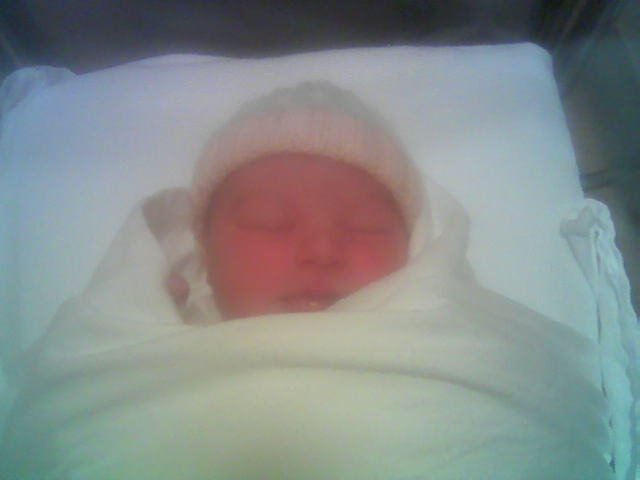
A GIRL!! God is good. Amy Fleur Picard welcome to the world. Margaret gave birth to a girl yesterday at 5.30pm she weighs 7lb 6oz. Both are doing well. Dad and Olivia are so proud of Mum and Amy. There's big goofy grins all over the place!! The photo is from a cellphone so its not the greatest quality but from my totally neutral position I think she's the cutest little poppet in the world!!

Gempf  

0 comments Posted by Andrew

Conrad Gempf's book Jesus Asked is now able to be accessed online for free here. I'm reading his Mealtime Habits of the Messiah. In his book he notes how we Westerners often enjoy pointing to the Pharisees as examples of people who Jesus didn’t like because they took the requirements of the Old Testament law too seriously. “We cherish the passages where Jesus tells them to loosen up. Why? Not because we are in the same situation as the Pharisees, so we need to hear what Jesus told them. We love it because “Lighten up” is already our motto.” Gempf points out that there is much that Jesus taught that is not easy or comforting. It’s difficult and offensive. We shouldn’t focus on the passages of the Bible that contain answers that resonate with us. “For instance, too many rich people name and claim promises like “God will provide”. Instead, maybe we should make little religious knick-knack vases wth dried flowers in them and “Woe to the rich” embossed in gold letters. Yes, Jesus loves us dearly, but we’re told he disciplines those he loves. Where are the t-shirts with the motto “Jesus had stern words for people like me”?”

It made me think what is a motto for a tee shirt that captures something of the radicalness of the gospel?

Broken  

0 comments Posted by Andrew


This week our sermon text is Exodus 6:1-13. I'm especially struck by the description of the Israelites having a broken spirit. I think when it comes to describing our feelings, the word broken is an incredibly powerful descriptor. Brokenness not in the cool sense of "not having it all together" but brokenness in the raw sense of busted and ruined. There's only a couple of times in my life I can remember being broken or having my spirit broken and they're so personal that I won't share them on an internet blog in case someone didn't treat them with respect. What happens when the cause of your brokenness is God? In last week's passage we saw that Moses felt that God had failed him. His brokenness leaked out all over the place. "O Lord, why have you mistreated this people?" Moses blamed Pharaoh's mistreatment of the Israelites squarely on God not Pharaoh. God promised to deliver them but he hasn't come through on his promises. God had failed them. "Since I first came to Pharaoh to speak in your name, he has mistreated this people, and you have done nothing at all to deliver your people." I'm struck this week by the words "Moses told this (God's message of redemption) to the Israelites; but they would not listen to Moses, because of their broken spirit and their cruel slavery." Broken is a powerful descriptor.

Jesus Asked  

2 comments Posted by Andrew


Conrad Gempf, NT lecturer at London School of Theology, wrote a book called Jesus Asked. Through some sweet relationship with Zondervan the book is going to be available to listen to via podcast. Go here to read more. It's not available yet but seems like it will be very soon. I haven't read this book but I really like the stuff I've read from Conrad Gempf (some of you might know him from the Christian Life & series.

I've had to turn on word verification for posts - I've been spammed. Sorry for the hassle.

The 3 B's  

2 comments Posted by Andrew


I've heard many people comment that a lot of churches today only seem to be interested in 3 B's: Bricks, bums and bucks - bricks for flash buildings, bums on seats and bucks in the bank. On the weekend we agreed as a church that we would build a deck to flow out of an already existing hall that we use as it would enhance what God is doing in terms of our hospitaility to the community and to our own church community. I do worry that I might have fallen into the trap of the 3 B's but I'm (genuinely) confident I can justify this decision (can't we always justify our decisions?!).

My wife is due in the next 2-3 weeks to give birth to our 2nd baby - it's very exciting. If I had one wish it would be that she would hurry up. The reason why is that the passage below is where we are up to in our sermon series on Exodus and frankly I'd rather be on paternity leave and give this one to someone else!

On the way, at the place of where they spent the night, the LORD met him and tried to kill him. But Zipporah took a flint and cut off her son's foreskin, and touched his feet with it, and said, "Truly you are a bridegroom of blood to me!" So he let him alone. It was then she said, "A bridegroom of blood by circumcision."

I thought I had carefully crafted this sermon series so that I would be off on paternity leave when this passage raised its ugly head. Come on Margaret, hurry up!! If ever there was a verse that I wished scribes through the centuries had edited out it would be this one!


The worship seminar went well on the weekend. As usual I totally overprepared. I'm haunted by the words of a trusted friend who suggested to me recently that I'm a perfectionist. He meant not in a good way but rather in a way that trusts in myself and my abilities rather than God and God's strength!

Anyway, enough self-flagellation! No blood was spilt on the carpet over the weekend. This is no mean feat when you have a room full of people who are very talented and passionate musicians and you are trying to ask questions about the content of some of their favourite songs! We all had a great time exploring what is worship and what are we trying to do on a Sunday morning? We had some very robust discussions at times where we let our differences grow us (I hope). I suggested that Sunday worship is less about creating a certain "experience" for people and more about spiritual formation of the people of God. Less about "getting something out of it" and more about growing a gospel people. Rather than making experience primary and trying to create some emotions we need to be faithful to the gospel (content) and allow that to produce it's own experiences. This will sometimes mean profound thankfulness and joy but other times lament or confession or wrestling with God. If we make experience (especially creating that warm fuzzy feeling) primary we run the risk of abusing the gospel for our own ends (i.e. creating an experience). We need to trust in the power of the gospel to grow a gospel people and allow this to create it's own experiences. My conclusion was that Sunday morning worship is about nurturing and growing a gospel people. Therefore, the content matters to make sure we are growing a gospel people and not just any sort of people.

A couple of fantastic and haunting quotes I really like in my research which both come from a journal article by Kevin Vanhoozer called "Worship at the Well" in the Trinity Journal 23 (2002):
"We worship what we know. If our knowledge is not deep, our worship won't be either."
"Our worship [and prayer] is the index to how well we have understood our faith."
And finally a quote from N.T. Wright (via Vanhoozer's article):
"If your idea of God...[and] salvation offered in Christ, is vague or remote, your idea of worship will be fuzzy and ill-informed."


"Let's face it. Christianity is a spectacular means to an end. We have a power structure that is open and accessible to people who have not earned or been granted much power from our culture. In local churches, there is money to be made, power to be had and opportunities to be seized. A man or woman who may not be successful in the business world can be chairman of the deacons, head of the parish committee or a member of the board of directors. For some, Christianity is only the means to an end, and whenever that happens, things turn ugly."

Real Live Preacher has written an outstanding article on an issues that every church faces and every Christian faces - the use and abuse of POWER! You can get to it via his website (which I'd recommend so that you can read the comments) or directly from this link.


At our church we have travelled through the gospel of Luke and are now looking at the book of Exodus. Prominent in both is the journey motif (Luke 9:52ff and the liberation of the Israelites from Egypt to the Promised Land). I read this today that captures beautifully something of the significance of journeying.

SEAN DIETRICH  

0 comments Posted by Andrew


Wow! I don't know who reads this blog (whether it's only 1 or 2 people or what). Today I had a comment left by Sean Dietrich who I've never heard of before. He's a Christian musician - songwriter who's been influenced by Keith Green and he seems like a really humble guy who loves Jesus. I'd encourage you to read his bio and listen to his music (free to download) - if his bio doesn't bring tears to your eyes then you've got a fridge for a heart!

ANOTHER QUIZ  

4 comments Posted by Andrew

I can't seem to avoid Barth. If you liked the last quiz then go and have a crack at this one. Unfortunately, some of the language is a bit archaic and gender exclusive!

You scored as Karl Barth. The daddy of 20th Century theology. You perceive liberal theology to be a disaster and so you insist that the revelation of Christ, not human experience, should be the starting point for all theology.

Karl Barth

87%

John Calvin

80%

Anselm

73%

Martin Luther

67%

J?Moltmann

53%

Paul Tillich

40%

Friedrich Schleiermacher

27%

Jonathan Edwards

20%

Charles Finney

20%

Augustine

20%

Which theologian are you?
created with QuizFarm.com

BARTHIAN!!  

16 comments Posted by Andrew

I wouldn't use it to define who I am, but it could be worse! But wasn't Barth quoted as saying I'm not a Barthian?!

You scored as Neo orthodox. You are neo-orthodox. You reject the human-centredness and scepticism of liberal theology, but neither do you go to the other extreme and make the Bible the central issue for faith. You believe that Christ is God's most important revelation to humanity, and the Trinity is hugely important in your theology. The Bible is also important because it points us to the revelation of Christ. You are influenced by Karl Barth and P T Forsyth.

Neo orthodox

82%

Evangelical Holiness/Wesleyan

79%

Emergent/Postmodern

57%

Reformed Evangelical

57%

Modern Liberal

32%

Fundamentalist

29%

Roman Catholic

25%

Charismatic/Pentecostal

18%

Classical Liberal

7%

What's your theological worldview?
created with QuizFarm.com

Go have a crack and see what you come up with.

Hat tip to Alister

Subscribe to: Posts (Atom)